Thanksgiving and Mental Health: How Gratitude Can Change Your Attitude | Mirci
November 26, 2026
Thanksgiving and Mental Health: How Gratitude Can Change Your Attitude
At Thanksgiving, we ask people what they’re thankful for and give them about six seconds to come up with an answer in front of the whole table. No pressure, right?
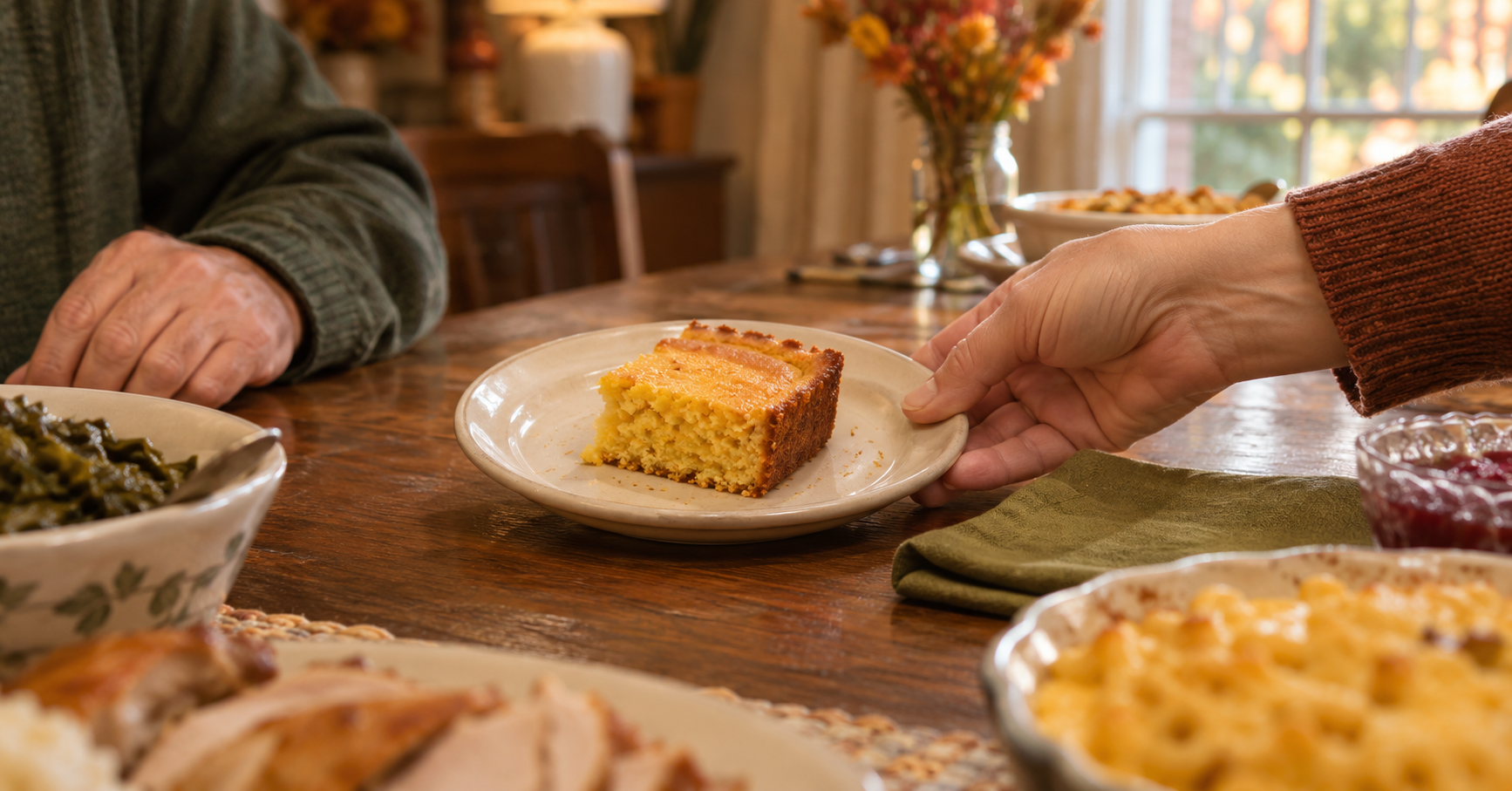
If somebody saved me the corner piece of cornbread, I’d count that. And I’d tell them.
That second part matters. Saying thank you gives you a moment to enjoy what went right. It also gives you a reason to reach out to the person who made it happen. Researchers have found benefits in both.
You get to spend a little more time with the good stuff
Say it’s been a long day. You remember every minute you spent on hold or that car that cut you off on 26. You’ve already forgotten that your coworker brought you the coffee you left on the Keurig. Another coworker left you a nice little note of encouragement and a sticker on your desk. Your work bestie gave you a hug when you needed it most. Your partner went out of their way to run an errand for you.
When you stop to think, “That made my morning a little easier,” "that brought me joy," or, "I felt supported," you get to enjoy their kindness all over again.
A review of research from 28 countries found that people who practiced gratitude had a boost in their well-being. The clearest gains showed up in feelings like joy and cheerfulness. On a day when you’ve got plenty on your mind, it can feel good to remember that something made you smile.
What gratitude looks like in the brain
Researchers have even taken gratitude into the MRI scanner. In one study, people imagined receiving help. The more grateful they felt, the more activity researchers saw in brain areas that help us weigh what matters and make sense of social situations.
In a separate experiment, part of the brain’s reward system responded to how much someone’s help benefited the person receiving it. Activity in another area tracked how grateful that person felt.
In a study of gratitude writing, people in counseling who wrote thank-you letters showed a stronger gratitude-related response in the front part of the brain during a “pay it forward” exercise three months later. The scans tracked changes in blood oxygen linked to brain activity. Whether giving thanks itself releases endorphins remains an open question.
Saying it out loud can help you feel more connected
Now imagine texting that coworker. “Hey, thanks for thinking of me. That note made me feel valued and appreciated.” They get to hear that their kindness mattered, and you get to remember that somebody was thinking about you.
In a study of more than 900 college students, those who sent thank-you texts directly to someone reported the biggest gains in feeling connected and supported over about a week. Feeling supported matters for mental health. Having people you can lean on can make stress easier to handle.
Another study found that people who kept a gratitude journal and were encouraged to thank others had the biggest short-term improvements in mood and depressive symptoms. How often they actually expressed thanks helped explain the change in mood. Across studies, the benefits for depression and anxiety tend to be modest. Gratitude is one small practice you can use alongside mental health care.
The part after “thank you”
“Thanks for helping with dinner” is a perfectly good thank-you. Here’s what happens when you add a little detail. “You saw I was juggling six things and took over the dishes. I finally got to sit down and hear the end of a story.” A Thanksgiving miracle, frankly.
In studies of couples, people felt more understood and cared for when their partner’s thank-you highlighted something they appreciated about them or what they’d done. Think about how it feels when someone notices the effort you felt like nobody saw. That’s something you can give somebody with one extra sentence.
Give it a minute
Think of one person who made your day a little easier. Tell them what they did and why it mattered. “Thanks for calling after my appointment. I needed to hear a familiar voice.” Two sentences will do just fine.
And if your answer at the Thanksgiving table really is “Whoever saved me the cornbread,” I hope you say it. Especially if they’re sitting right there.
Sources
- Gratitude practices and well-being across 28 countries (PNAS)
- Gratitude by text and feelings of social connection (Affective Science)
- Social connection and mental health (CDC)
- Gratitude journals, giving thanks, and mood (Journal of Clinical Psychology)
- Gratitude practices and symptoms of depression and anxiety (Journal of Happiness Studies)
- What makes a thank-you feel personal (Social Psychological and Personality Science)
- Brain activity during feelings of gratitude (Frontiers in Psychology)
- Gratitude letter writing and later brain activity (NeuroImage)
- How functional MRI detects changes linked to brain activity (UC San Diego)
- How reward-related brain activity contributes to gratitude (Journal of Neuroscience)


